Guide
Solar panel size: how big panels are and what fits
Solar panel size explained: how wattage and efficiency set a panel's area, how much roof a typical 7.7 kW home system covers, and how to check your roof.
Updated October 26, 20264 min readReviewed by SolarRealCost Editorial Team, editorial review: primary sources checked and independently fact-checked
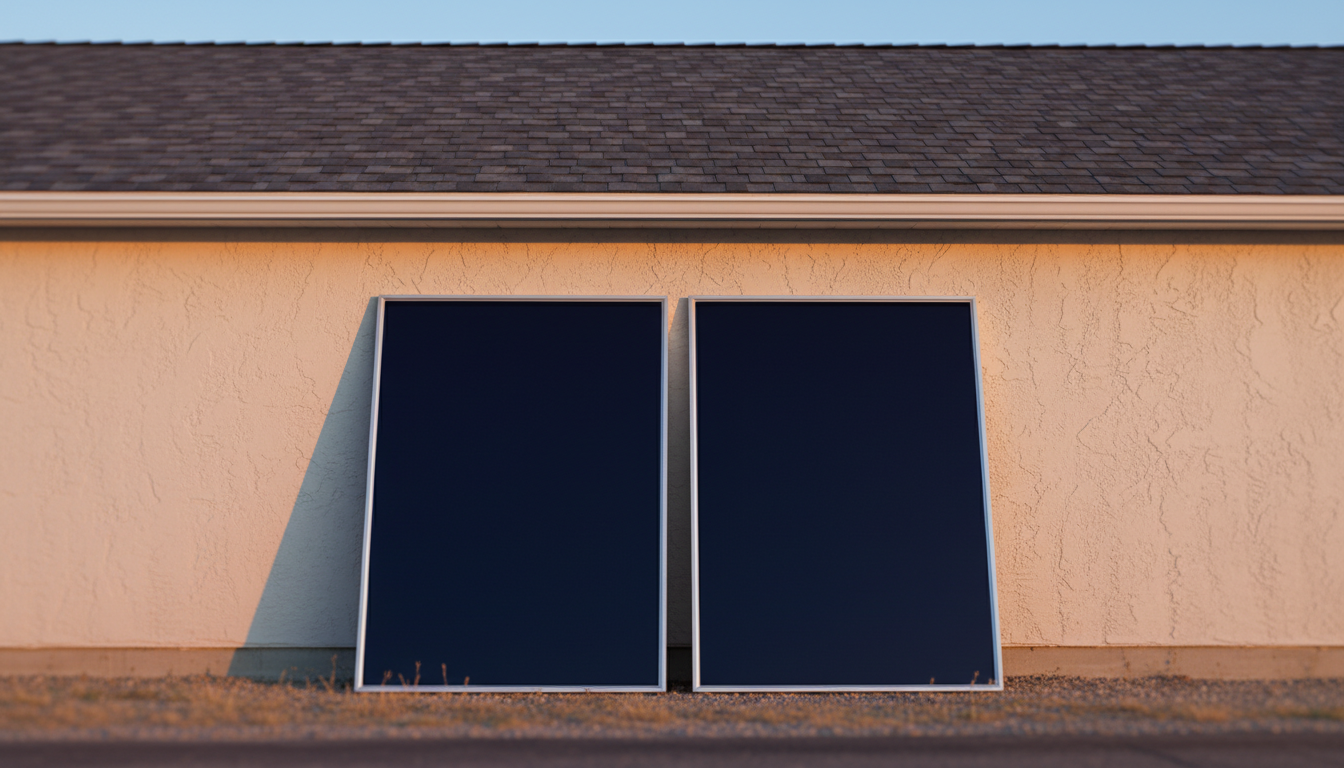
Solar panel size comes down to two numbers on the spec sheet: wattage and efficiency. Panels are rated under light of 1,000 watts per square meter, so a 400-watt panel at 21% efficiency covers about 1.9 square meters, roughly 20.5 square feet. For a whole home system, the national lab's PVWatts model uses the same idea: area equals system size divided by efficiency. That puts the median 2025 home system at roughly 400 to 440 square feet of panels.
How solar panel size is set: watts and efficiency
Panel ratings come from a lab test. A Department of Energy report written by NREL researchers for its Federal Energy Management Program says module ratings are measured at "1,000 W/m2 of sunlight and 25°C cell temperature." Efficiency is the share of that light the panel turns into electricity.
So you can work out a panel's area from its label:
area in m² = panel watts ÷ (efficiency × 1,000)
| Panel | Efficiency | Area (m²) | Area (sq ft) |
|---|---|---|---|
| 400 W | 21% | 1.9 | 20.5 |
| 400 W | 19% | 2.1 | 22.7 |
These are our calculations on example panels, not measurements of a particular model. The real length and width are on the panel's spec sheet, and Berkeley Lab uses those spec-sheet values in its own research. The efficiency figure is a lab rating too, measured under those same test conditions.
How much roof a home system needs
The national lab's PVWatts system design help estimates total module area with one formula: "Estimated Total Module Area (m²) = System Nameplate Capacity (kW) ÷ Approximate Nominal Efficiency." It uses 19% for standard modules and 21% for premium ones.
Berkeley Lab's 2026 data update says the median U.S. residential system was 7.7 kW in 2025, "with most systems ranging from roughly 5-12 kW." Run that through the PVWatts formula:
| System | Standard modules (19%) | Premium modules (21%) |
|---|---|---|
| 1 kW | 5.3 m² (57 sq ft) | 4.8 m² (51 sq ft) |
| 7.7 kW (2025 median) | 40.5 m² (436 sq ft) | 36.7 m² (395 sq ft) |
That's the area of the panels themselves, again our arithmetic. The layout also has to fit your roof's shape, and shade matters: the Department of Energy notes that trees shading a roof can make rooftop panels a poor fit.
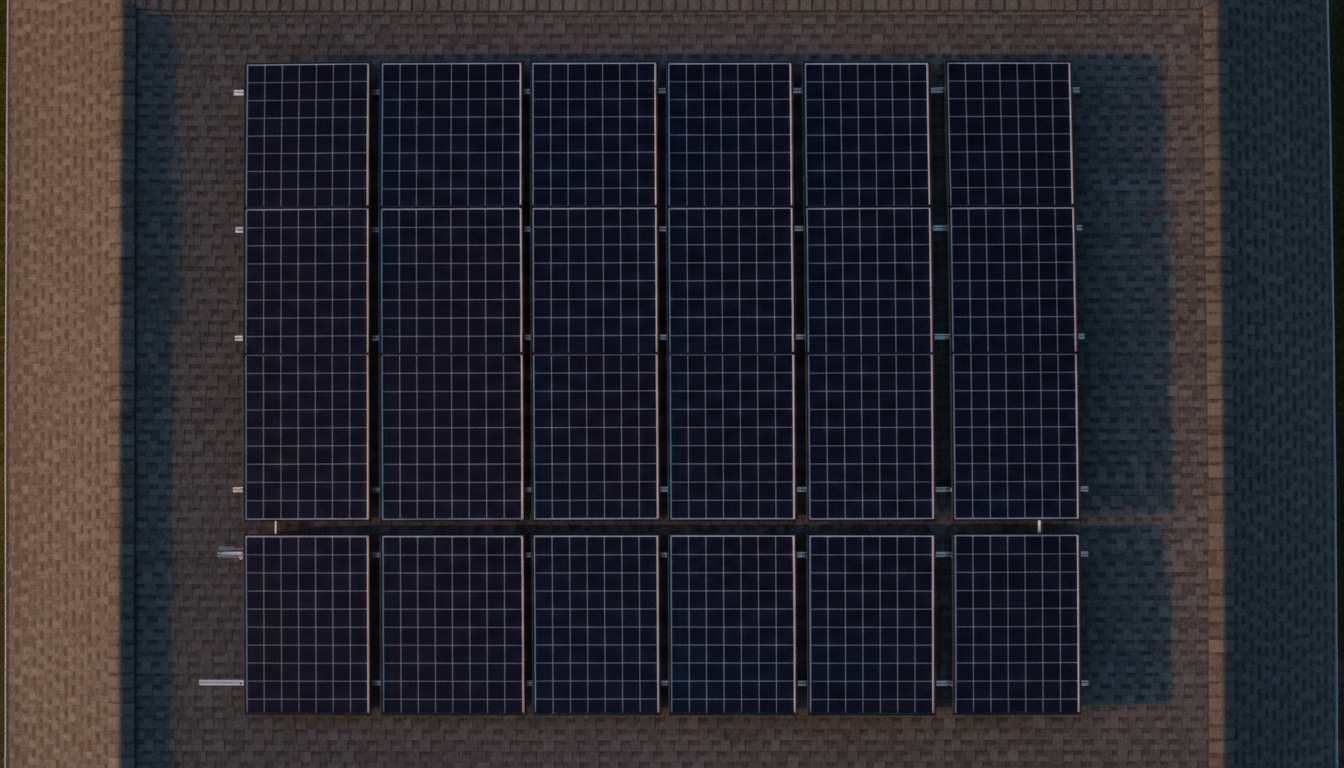
Berkeley Lab also measures how much of the roof systems actually cover. In 2025, residential systems "typically ranged from 16-39% of total roof area," with a median of 31% on multi-story homes and 22% on single-story homes.
When roof space limits the system
If your electricity use calls for more kilowatts than fit on your sunny roof faces, panel efficiency starts to matter. PVWatts notes that a system of a given size "requires less area" with premium modules, and that "if space for the array is limited, you may be able to design a higher capacity system using premium modules." Berkeley Lab says home system sizes have closely tracked module efficiency since 2010, with both up roughly 50%, which suggests efficiency gains drove bigger systems "where roof and shading constraints are often binding."
The Department of Energy's homeowner guide lists "the size, shape, and slope of your roof" among the things to consider before going solar. So work out the system size you need from your bills first, then see whether it fits.
Our guide on how many solar panels you need walks through the sizing arithmetic.
Bottom line
Solar panel size follows from wattage and efficiency: about 1.9 to 2.1 square meters for a 400-watt panel at typical efficiencies, by our arithmetic. A median 7.7 kW home system needs roughly 400 to 440 square feet of panels, and real systems in 2025 typically covered 16% to 39% of the roof. Size the system from your use first, check it fits, and then compare the price against what solar costs to install.
Common questions
How big is a solar panel?
It depends on its wattage and efficiency, both on the spec sheet. Since panels are rated under 1,000 watts of light per square meter, area is roughly watts divided by (efficiency × 1,000). A 400-watt panel at 21% efficiency works out to about 1.9 square meters, roughly 20.5 square feet (our arithmetic).
How much roof space does a home solar system need?
The national lab's PVWatts model estimates module area as system size in kW divided by efficiency. The median U.S. home system in 2025 was 7.7 kW, per Berkeley Lab, which at the standard 19% efficiency is about 40.5 square meters, or about 436 square feet of panels (our arithmetic).
How much of the roof do solar panels usually cover?
Berkeley Lab found residential systems installed in 2025 typically covered 16% to 39% of total roof area, with a median of 31% on multi-story homes and 22% on single-story homes.
Do higher-efficiency panels take up less space?
Yes, for the same capacity. PVWatts notes that a system with premium modules requires less area than one of the same size with standard or thin-film modules.
Sources
- National Laboratory of the Rockies: PVWatts system design help (System Advisor Model)
- Lawrence Berkeley National Laboratory: U.S. Distributed Solar and Storage, 2026 Data Update
- U.S. Department of Energy (FEMP, report by NREL): Understanding Solar Photovoltaic System Performance
- U.S. Department of Energy: Homeowner's guide to going solar
By SolarRealCost Editorial Team. First published October 26, 2026. Advertiser disclosure
Keep reading