Guide
Solar panel efficiency: what the number really tells you
Solar panel efficiency explained: what the rating measures, the roughly 21% typical of home panels, why heat cuts it, and when paying more for it makes sense.
Updated October 26, 20266 min readReviewed by SolarRealCost Editorial Team, editorial review: primary sources checked and independently fact-checked
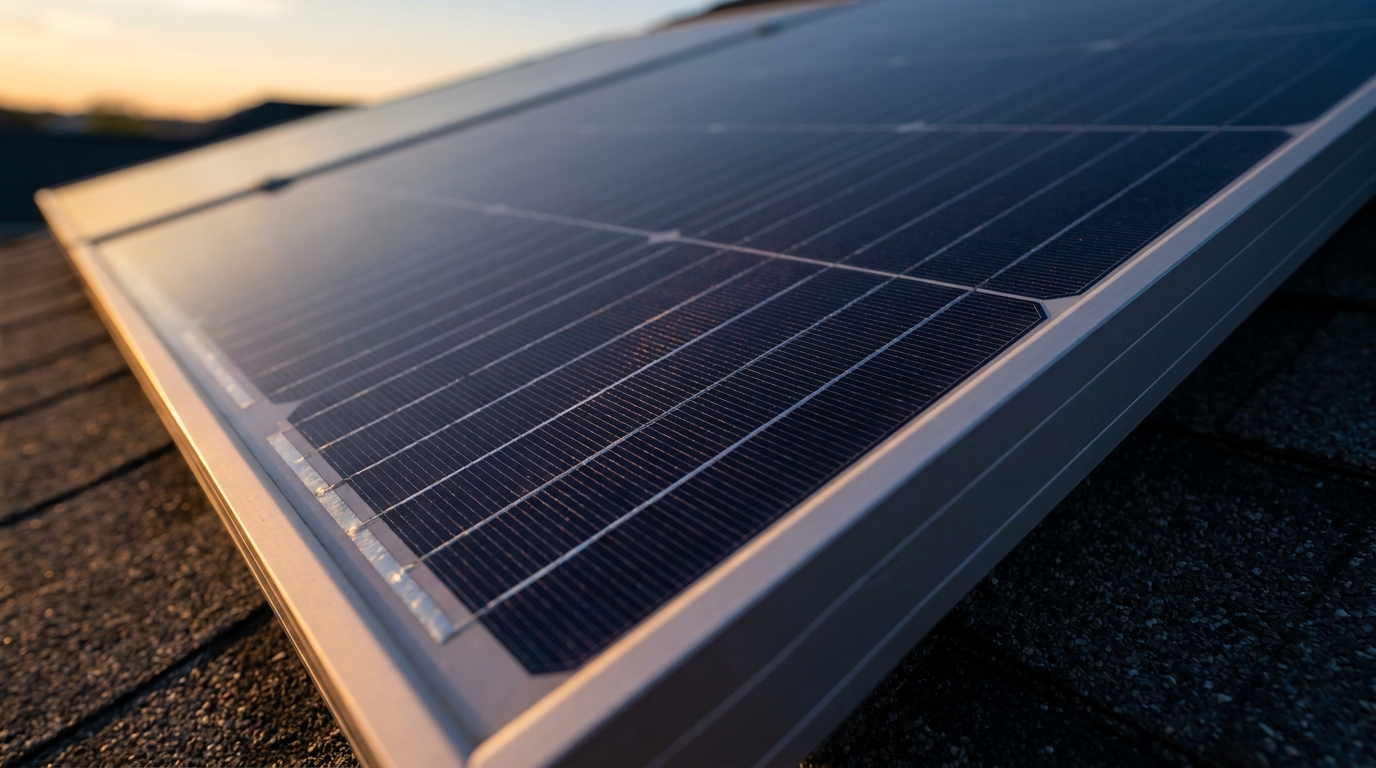
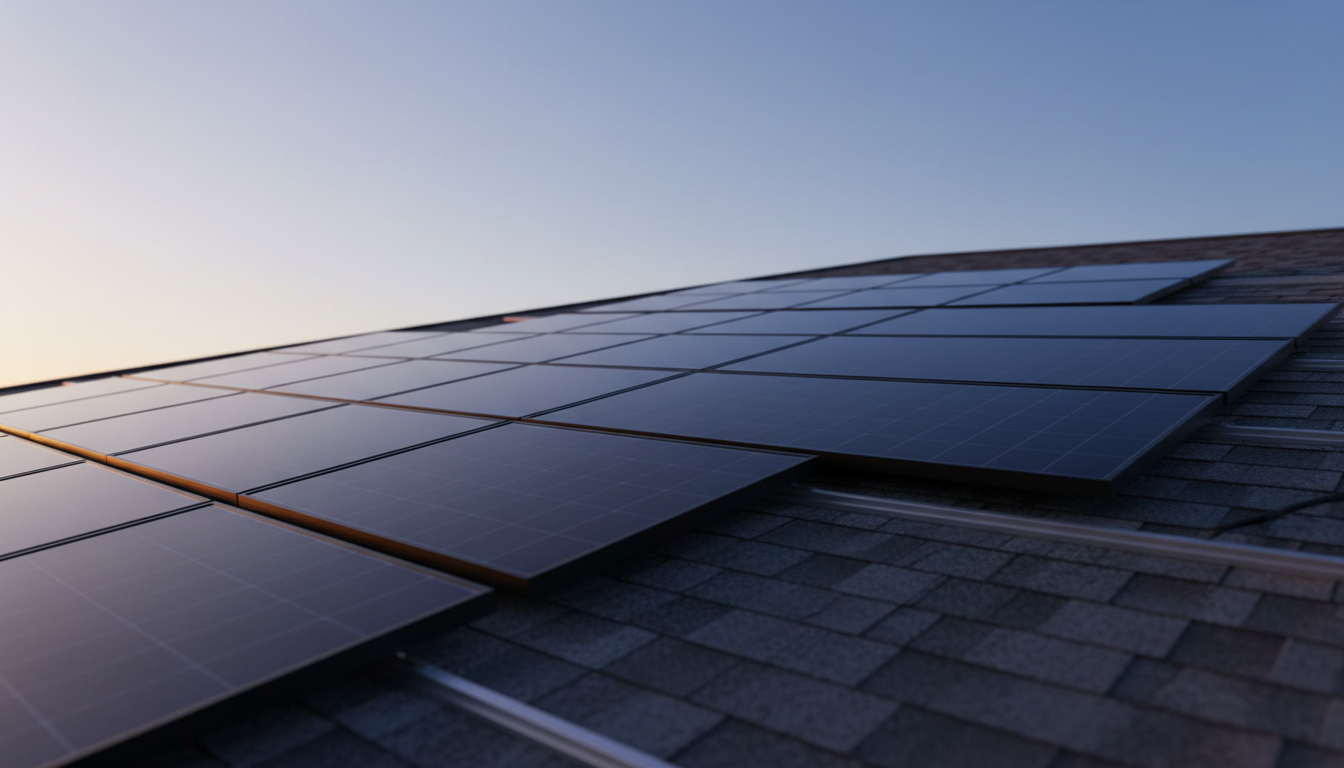
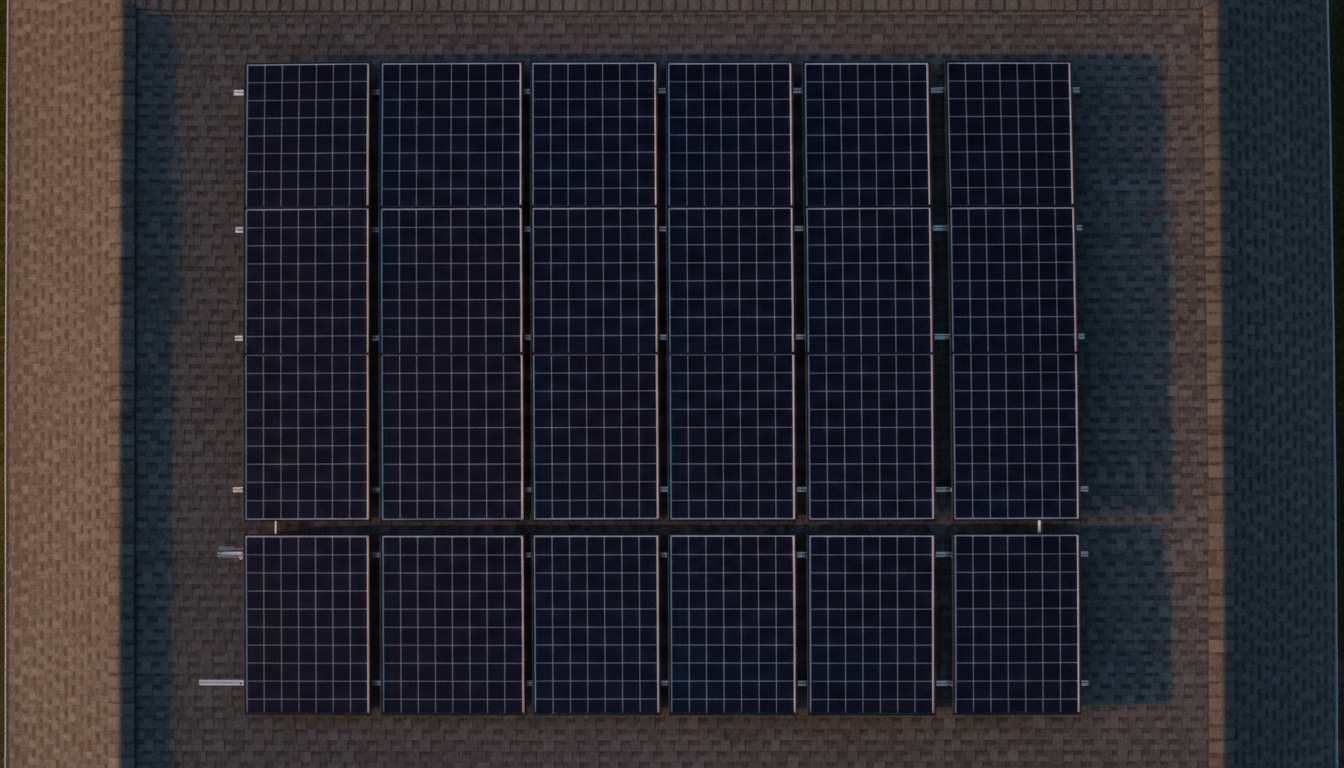
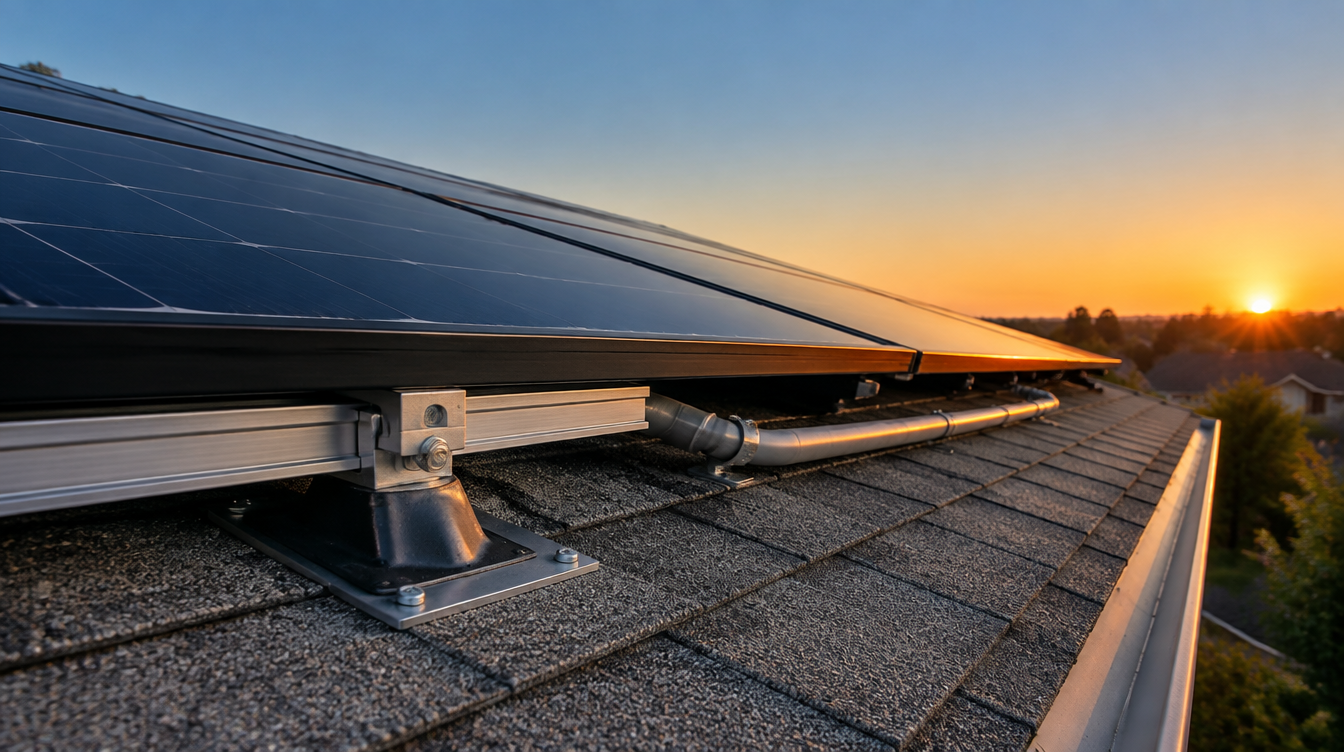
Solar panel efficiency is the share of the sunlight hitting a panel that comes out as electricity. Panels installed on U.S. homes in 2024 had a median efficiency of about 21%, and most sat in a narrow band around it. A more efficient panel fits more watts on the same patch of roof. It doesn't make each kilowatt you pay for produce much more, so efficiency matters most when roof space is short.
What the solar panel efficiency rating measures
The Department of Energy defines the conversion efficiency of a solar cell as the percentage of the solar energy shining on it that is converted into usable electricity. It's measured by exposing the cell to "a constant, standard level of light" while holding its temperature steady.
For panels, that standard is called standard test conditions, or STC. A Department of Energy report on federal solar systems, written by NREL researchers for the DOE's Federal Energy Management Program (FEMP), says module ratings are measured at "1,000 W/m2 of sunlight and 25°C cell temperature." A panel's wattage and its efficiency both come from that test.
You can check the figure yourself. Berkeley Lab calculates module efficiency from each panel's nameplate rating and surface area. Under STC, 1,000 watts of sunlight lands on each square meter, so:
efficiency = panel watts ÷ (panel area in m² × 1,000)
Take a hypothetical 420-watt panel with an area of 2 square meters: 420 ÷ 2,000 = 21%. That's our arithmetic, and the area is an example. The real numbers are on the panel's spec sheet.
What's normal for home panels now
Lawrence Berkeley National Laboratory tracks prices and equipment on real installs across the U.S. Its 2025 data update found that, for systems installed in 2024, module efficiencies had "a median of roughly 21% and a percentile range of 20.5-21.5% (for residential)." So most panels going on homes are within about a percentage point of each other.
The same report traces the trend: median residential efficiency rose "from 13.0% in 2003 to 20.9% in 2024," though it was flat from 2022 to 2024. The National Laboratory of the Rockies (formerly NREL) uses the same 21% for the 2024 market in its Annual Technology Baseline.
Don't mix up panel figures with research records. The same lab keeps a chart of the highest confirmed efficiencies for research cells, confirmed by independent test labs. They're lab devices. You can't buy them for a house.
Why solar panel efficiency matters mainly when roof space is short
A more efficient panel makes more watts per square foot. For a homeowner, that's most of the difference. The lab's PVWatts system design help, which documents the model behind its PVWatts calculator, lists three module types:
| PVWatts module type | Approximate nominal efficiency | Temperature coefficient of power |
|---|---|---|
| Standard (crystalline silicon) | 19% | −0.37% per °C |
| Premium (crystalline silicon) | 21% | −0.35% per °C |
| Thin film | 18% | −0.32% per °C |
The same page says a system of a given size in kilowatts "requires less area" with premium modules than with standard or thin-film ones. It also says that if you compare two systems identical except for module type, "you may find that the total annual or monthly output is slightly higher for the standard module type." So a kilowatt of efficient panels doesn't reliably out-produce a kilowatt of ordinary ones. What you're paying for is space.
That matters when the roof is the limit. Berkeley Lab's 2026 data update found that residential system sizes and module efficiency have both risen by roughly 50% since 2010. It says this suggests efficiency gains have driven bigger home systems, "where roof and shading constraints are often binding." It adds that higher efficiency allows denser installations, which can trim installation costs that scale with square footage.
If your usage calls for more kilowatts than ordinary panels can fit on your sunny roof faces, a higher-efficiency panel can close the gap. If the array you need fits easily, the extra efficiency may not change much. Work out the size you need first; how many solar panels you need walks through the arithmetic.
Heat and the other real-world losses
Your roof rarely looks like the test lab. The FEMP report says that in practice "the intensity of sunlight is usually less than 1,000 W/m2, and the cell temperature is typically hotter than 25°C."
Start with heat. The DOE's efficiency basics say "solar cells generally work best at low temperatures." Higher temperatures cause "a slight increase in current" but "a much larger decrease in voltage." Each panel's spec sheet lists a temperature coefficient: the FEMP report defines it as the percent reduction in power per degree Celsius above a reference temperature. At −0.37% per °C, cells running 25°C above the test temperature would make about 9% less power at that moment. That's our arithmetic on the PVWatts standard value. A smaller coefficient (closer to zero) means the panel handles heat better, which counts for more in hot climates.
Then there's everything else. Dirt, shade, wiring, small mismatches between panels and downtime all take their share. PVWatts uses a default of 14% for total system losses, which it calls "appropriate for most typical photovoltaic systems." Panels also produce a little less each year as they age; how long solar panels last covers that.
The efficiency rating ignores all of these losses. Modeled production includes them, which is why it's the better number to compare.
What matters more than solar panel efficiency
Two things decide whether a system makes sense for you: what it costs, and how much electricity it will make on your roof.
Cost per watt. Divide the system price by its size in watts to compare quotes with different panels on an equal footing. If a higher-efficiency panel raises the price per watt and you have room for ordinary panels, you're paying for space you don't need. Typical prices are in what solar costs to install.
Modeled production. Ask each installer for estimated annual kilowatt-hours, then check it yourself in PVWatts for your address, roof direction and tilt. Dividing price by expected annual production lets you compare quotes on what you actually get.
If you're still working out whether your house suits solar at all, start with solar panels for home.
Bottom line on solar panel efficiency
Solar panel efficiency tells you how much power a panel makes per square meter under lab conditions. Most home panels are close to 21%, and real roofs run hotter and dimmer than the lab. A higher number mainly buys roof space. If your roof is tight, efficiency can be worth paying for. If not, compare quotes by price per watt and by modeled production at your address.
Common questions
What is a good solar panel efficiency for a home?
Most home panels now sit close together. Berkeley Lab found a median module efficiency of roughly 21% for residential systems installed in 2024, with most between 20.5% and 21.5%.
What does the efficiency percentage on a panel actually measure?
The share of the sunlight hitting the panel that comes out as electricity, measured under standard test conditions: 1,000 watts of light per square meter and a cell temperature of 25°C. On a real roof the light is usually weaker and the cells hotter, so the panel produces less than its rating most of the time.
Does a more efficient panel produce more electricity?
Per panel, yes, because it packs more watts into the same area. Per kilowatt of capacity, not really: the National Laboratory of the Rockies' PVWatts help notes that for otherwise identical systems you may find the standard module type gives slightly higher annual output than the premium type. Efficiency mainly decides how many kilowatts fit on your roof.
Do solar panels lose efficiency in hot weather?
Yes. The Department of Energy says solar cells generally work best at low temperatures, and higher temperatures lower their voltage. A panel's temperature coefficient tells you how much power it loses per degree Celsius above the 25°C test temperature.
Are record solar cell efficiencies the same as solar panel efficiency?
No. The National Laboratory of the Rockies tracks the highest confirmed efficiencies for research cells, which are lab devices, not the panels sold for homes.
Sources
- U.S. Department of Energy: Solar photovoltaic performance and efficiency basics
- U.S. Department of Energy (FEMP, report by NREL): Understanding Solar Photovoltaic System Performance
- Lawrence Berkeley National Laboratory: U.S. Distributed Solar and Storage, 2025 Data Update
- Lawrence Berkeley National Laboratory: U.S. Distributed Solar and Storage, 2026 Data Update
- National Laboratory of the Rockies: PVWatts system design help (System Advisor Model)
- National Laboratory of the Rockies: PVWatts Calculator
- National Laboratory of the Rockies: Best Research-Cell Efficiency Chart
- National Laboratory of the Rockies: Annual Technology Baseline 2025, residential PV
By SolarRealCost Editorial Team. First published October 26, 2026. Advertiser disclosure
Keep reading