Guide
How many solar panels do you actually need?
Work it out from your own annual usage before anyone tells you. The arithmetic, why panel count alone means nothing, and when a smaller array is better.
Updated September 18, 20262 min readAwaiting expert review
Written from primary sources by our editorial team. A credentialed reviewer hasn't signed off yet, so this page isn't in search results. It's information, not professional advice.
Not sure where to start? Take the Solar Check.About 2 minutes. Rough answers are fine.You can work this out yourself in about five minutes, and it is worth doing before anyone quotes you — because a quote larger than your usage justifies is the most common thing to find in this market.
The arithmetic
Take your annual kilowatt-hours from twelve months of bills. Divide by how many kilowatt-hours a kilowatt of array produces per year where you live — that production factor is exactly what NREL's PVWatts gives you, for your address, roof orientation, pitch and shading. The result is the kilowatts of array you need.
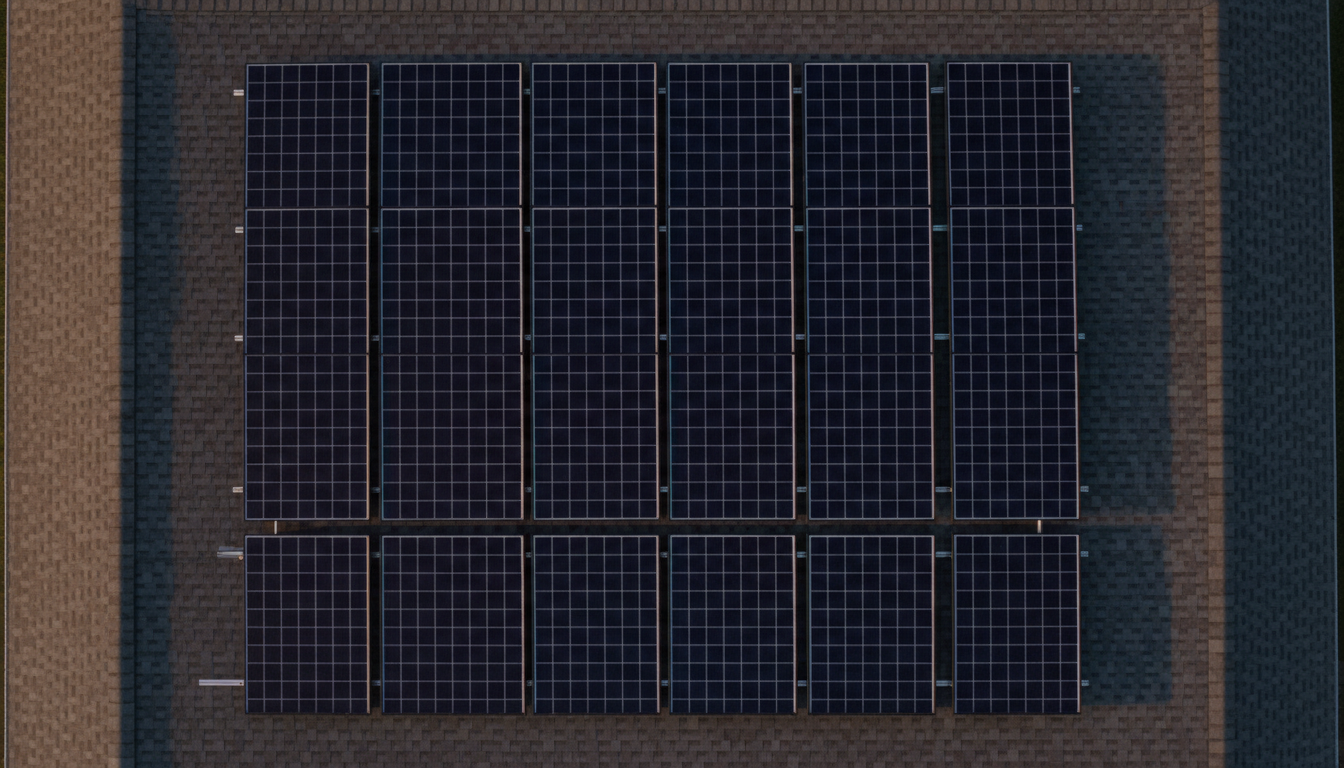
Then divide by the wattage of the panels being quoted. At today's common 400 to 450 watt panels, a 7 kW array is roughly sixteen to eighteen panels.
Why panel count on its own is meaningless
"Eighteen panels" describes nothing until you know the wattage. Two proposals with the same count can differ by more than a kilowatt of capacity. Always ask for the wattage and the total kW, and check both against the production model — the PVWatts v8 documentation explains what the model accounts for.
Orientation and shade
An east or west facing array works; it simply needs more panels for the same annual output. Shade is different — it is the one constraint no design fully solves, and it should be measured rather than estimated by eye. If a proposal assumes almost no shading loss on a roof with trees, that assumption is doing a lot of work.
Bottom line
Do the arithmetic from your own bills, run PVWatts yourself, and treat any large gap between that and a quote as a question rather than an answer. The economics are in are solar panels worth it now and the price in what solar costs to install.
Common questions
How do I work out the array size?
Annual kilowatt-hours divided by how many kilowatt-hours a kilowatt of array produces per year where you live. Then divide by the panel wattage being quoted to get a count.
Where do I find my annual usage?
Twelve months of bills, or your utility's online account. Use a real year rather than one month, because summer and winter differ enormously.
How many panels is a kilowatt?
At today's common residential wattages of roughly 400 to 450 watts, a little over two. So a 7 kW array is about sixteen to eighteen panels.
Should the system cover all my usage?
Not automatically. Where exported power is credited at a low rate, a smaller array you mostly consume yourself can pay back better.
Sources
- NREL Developer Network: PVWatts v8 API documentation
- NREL: PVWatts Calculator
- U.S. Energy Information Administration: Residential Energy Consumption Survey
- U.S. Energy Information Administration: average retail price of electricity by state
- U.S. Department of Energy: Homeowner's guide to going solar
By SolarRealCost Editorial Team. First published September 18, 2026. Advertiser disclosure
Keep reading