Guide
Best angle for solar panels: tilt, direction and your roof
The best angle for solar panels is roughly your latitude, facing south, but on a house the roof pitch usually decides. What tilt and direction change.
Updated October 26, 20265 min readReviewed by SolarRealCost Editorial Team, editorial review: primary sources checked and independently fact-checked
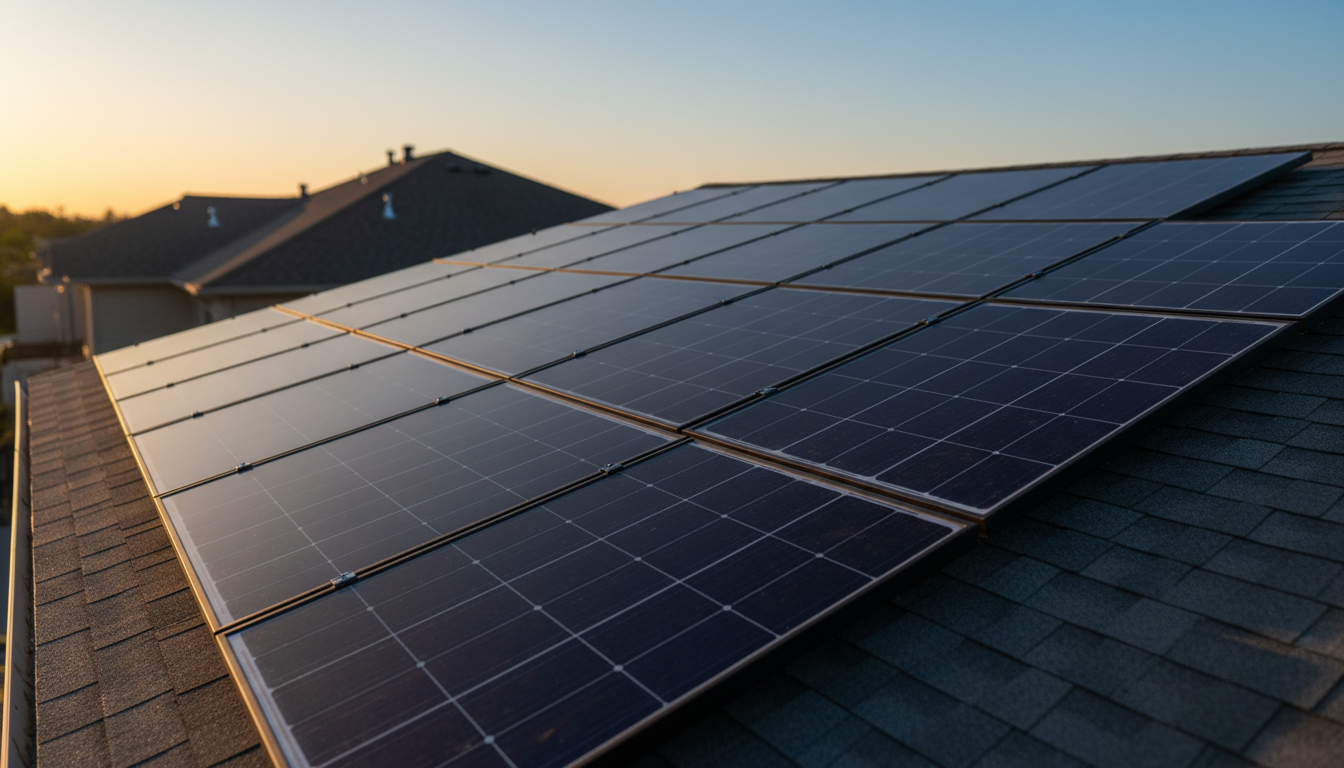
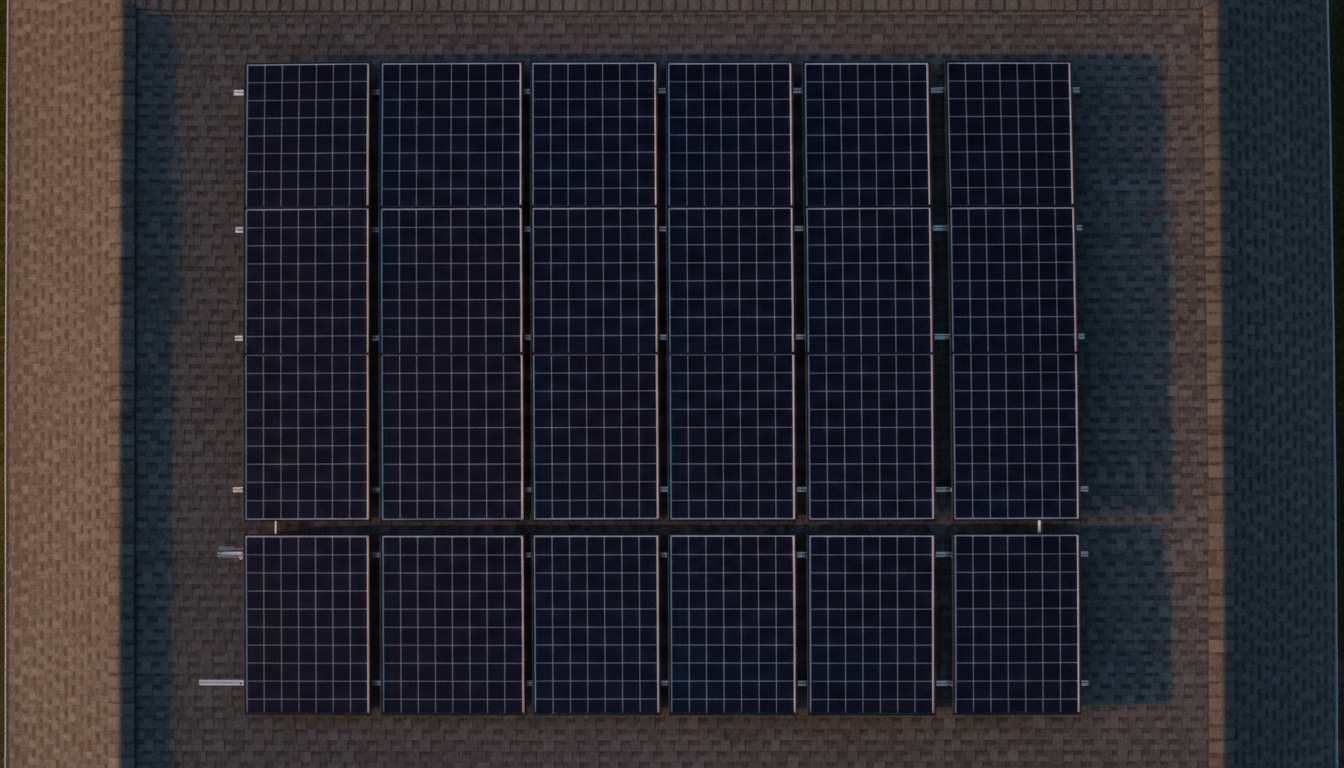
The best angle for solar panels on a fixed mount is roughly your latitude, facing south. That's the rule of thumb in the national lab's PVWatts documentation for getting the most electricity over a year. On a house, though, the panels usually sit at the roof's own pitch, so the useful question is whether your roof's angle and direction are good enough. The DOE's answer for a typical house is a south-facing roof between 15 and 40 degrees, and it says other roofs may be suitable too.
What "angle" means for solar panels
There are two angles, and people mix them up.
Tilt is how steeply the panels lean. PVWatts measures it in degrees from horizontal: 0° is lying flat and 90° is standing straight up. Azimuth is the compass direction the panels face. PVWatts counts it clockwise from true north, so 90° faces east, 180° faces south and 270° faces west.
Both matter because the sun's path changes through the day and through the year. The Department of Energy's solar radiation basics note that the sun's rays "are far more slanted during the shorter days of the winter months." Its example: Denver gets nearly three times more solar energy in June than in December.
The best angle for solar panels, by the numbers
PVWatts gives the standard starting point: "A common rule of thumb for fixed arrays is to set the tilt angle to the latitude of the system's location to maximize the system's total electrical output over the year." It adds that a lower tilt favors peak production in summer, when the sun is high, and a higher tilt increases output in winter.
So the best angle for solar panels depends a little on what you're after. For the biggest yearly total, aim near your latitude. A shallower array tilts toward summer output, and a steeper one toward winter.
There's a catch. The same page says higher tilt angles "tend to cost more for racking and mounting hardware, and may increase the risk of wind damage to the array." For panels on a roof, it suggests what most people would guess: a tilt equal to the roof pitch. The calculator's own default for a fixed array is 20°.
If you know your roof pitch as rise over run, PVWatts publishes the conversion:
| Roof pitch (rise/run) | Tilt angle |
|---|---|
| 4/12 | 18.4° |
| 5/12 | 22.6° |
| 6/12 | 26.6° |
| 8/12 | 33.7° |
| 10/12 | 39.8° |
| 12/12 | 45.0° |
The DOE's homeowner guide gives the practical band for a house: "Typically, solar panels perform best on south-facing roofs with a slope between 15 and 40 degrees, though other roofs may be suitable too." Pitches from 4/12 to 10/12 fall inside it.
Which direction should solar panels face?
In the U.S., south. PVWatts uses an azimuth of 180° (due south) as its default in the northern hemisphere because it typically maximizes production over the year, though it notes that local weather can shift the best direction slightly either way.
East and west roofs still work. Turning the array west of south "favors afternoon energy production," and turning it east favors the morning, PVWatts explains. Whether afternoon output is worth more to you depends on how your utility pays for electricity at different hours and for what you send back to the grid. Our guide to what your utility pays for exported solar covers that side.
A north-facing roof is the hard case. PVWatts treats 0° as facing north, and nothing in the guidance above suggests it as a good choice for a home in the U.S. If your only good roof faces north, model it before anyone sells you on it.
Should you add racks to change the angle?
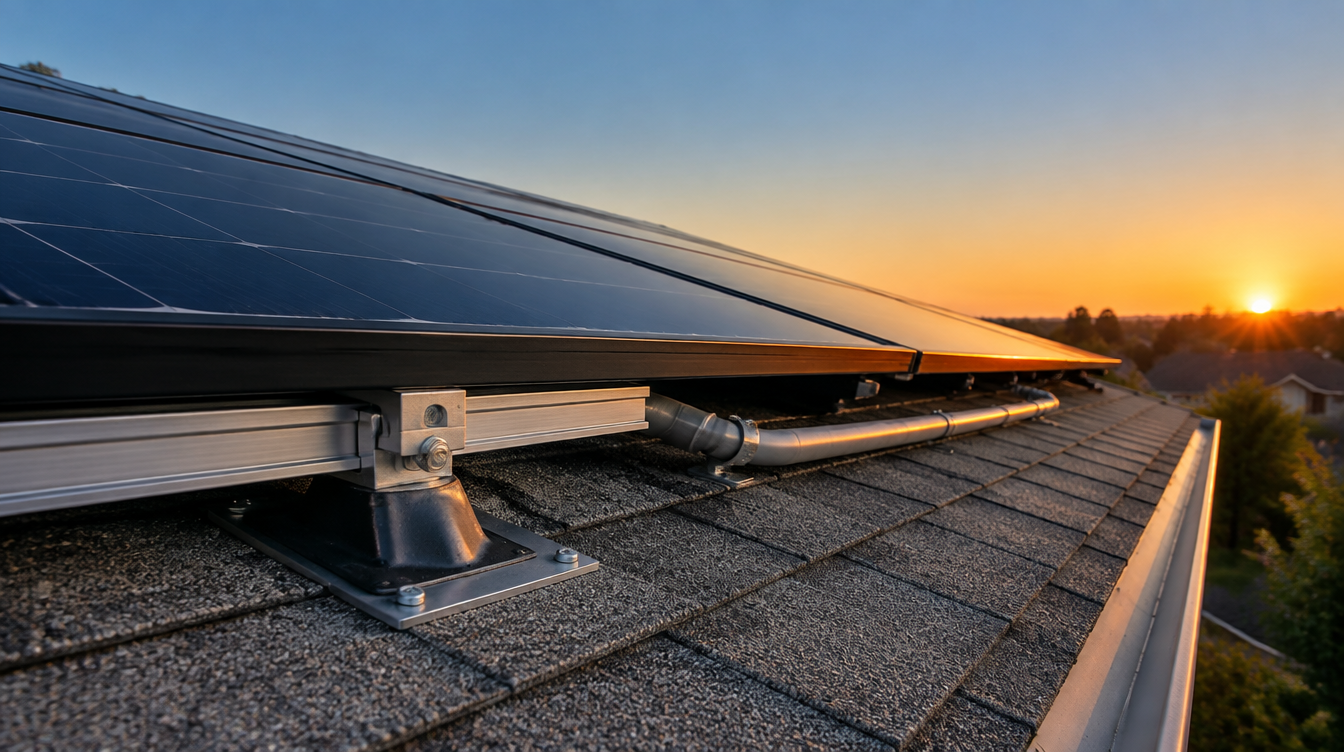
On a pitched roof, panels are normally attached close to the surface. The national lab's system design help describes a typical residential roof mount as modules on standoffs with limited air flow behind them, "typically between two and six inches." Tilting panels up off a pitched roof to chase the perfect angle adds the racking cost and wind exposure PVWatts warns about.
Flat roofs and ground mounts are different. There the installer has to pick a tilt, and the PVWatts rules above apply directly. For ground-mounted (open rack) arrays, the national lab's system design help assumes modules are arranged in rows, which brings in shading between rows. Whether a yard array is worth the extra work is covered in our guide to ground mounted solar panels.
You'll see advice online about moving panels steeper in winter and flatter in summer. That only applies to panels you can actually adjust, which a fixed roof array isn't.
Check your own roof
Angle and direction are two inputs among many. Shade matters too, and it varies roof by roof. The public PVWatts calculator lets you enter your address, tilt, azimuth and losses and see the estimated yearly output. Run it once at your real pitch and direction. Divide the yearly output by the system size you entered to get output per kilowatt, then divide your yearly use by that figure to see roughly how big a system you'd need.
If you're still deciding whether your house suits solar at all, start with solar panels for home. For sizing from your bills, see how many solar panels you need.
Bottom line
The best angle for solar panels is close to your latitude, facing south, if you're free to choose. On a house you usually aren't, and you don't need to be: the DOE says south-facing roofs between 15 and 40 degrees typically perform best, and east or west roofs still produce. Model your actual roof before comparing quotes, then weigh the result against what solar costs to install.
Common questions
What is the best angle for solar panels?
A common rule of thumb for a fixed array is a tilt equal to your latitude, which the national lab's PVWatts help says maximizes total output over the year. On a house, panels usually follow the roof, and the Department of Energy says panels typically perform best on south-facing roofs with a slope between 15 and 40 degrees.
Which direction should solar panels face?
In the northern hemisphere, south. PVWatts uses a south-facing azimuth of 180 degrees as its default because it typically maximizes production over the year. Turning the array toward the west favors afternoon output, and toward the east favors morning output.
Should I change the tilt of my panels for winter and summer?
On a roof, usually not, since the panels sit at the roof's pitch. PVWatts notes that a lower tilt favors summer and a higher tilt favors winter, but steeper racking tends to cost more and can raise the risk of wind damage.
How do I convert my roof pitch to a tilt angle?
PVWatts publishes a conversion: a 4/12 pitch is about 18.4 degrees, 6/12 is 26.6, 8/12 is 33.7 and 12/12 is 45 degrees.
Sources
- National Laboratory of the Rockies: PVWatts help, tilt
- National Laboratory of the Rockies: PVWatts help, azimuth
- National Laboratory of the Rockies: PVWatts system design help (System Advisor Model)
- U.S. Department of Energy: Homeowner's guide to going solar
- U.S. Department of Energy: Solar radiation basics
- National Laboratory of the Rockies: PVWatts calculator
By SolarRealCost Editorial Team. First published October 26, 2026. Advertiser disclosure
Keep reading