Guide
Solar panel installation: every step from contract to switch-on
Solar panel installation, step by step: site visit, design, permit, install, inspection and utility approval, how long each took in NREL data, and when to switch on.
Updated November 7, 20268 min readReviewed by SolarRealCost Editorial Team, editorial review: primary sources checked and independently fact-checked
Solar panel installation on a US home runs through the same steps almost everywhere. The installer visits and designs the system, then applies for a local permit and, in many places, for utility approval. The crew installs the system, the city or county inspects it, and the utility gives you permission to operate (PTO). In NREL's study of about 131,000 home systems installed from 2017 to 2021, a typical project took 70 to 100 business days, about 14 to 20 weeks, from contract signing to switch-on. The system stays off until the utility says yes.
The solar panel installation process, step by step
These are the steps a rooftop system usually goes through after you sign with a licensed contractor. The order comes from the California Public Utilities Commission's overview of a typical rooftop solar process and NREL's description of the phases. Local details vary.
- Contract and the cancellation window. Signing starts the clock. If you signed at home, the FTC's Cooling-Off Rule gives you until "midnight of the third business day after the sale" to cancel, and some states allow more time: California, for example, gives buyers 65 or older five days, per the CPUC's 2025 guide. Our guide on cancelling a solar contract covers it.
- Site visit. An installer comes out "to confirm assumptions and check roof, ground, and electric conditions," in the CPUC's words. This is the point where a roof near the end of its life or an electrical problem should come up.
- Final design and applications. The installer finalizes the design and applies for the building permit. NREL describes this as the step where the installer "prepares the PII application materials, and submits applications to the AHJ and the utility." (PII means permitting, inspection and interconnection. AHJ, the authority having jurisdiction, is your city or county building department.)
- Permit and utility review. The building department reviews the plans and issues the permit. Some utilities also approve the project before it's built. Many don't: NREL found at least 19 utilities, including California's three largest investor-owned utilities, that review the interconnection only at the end.
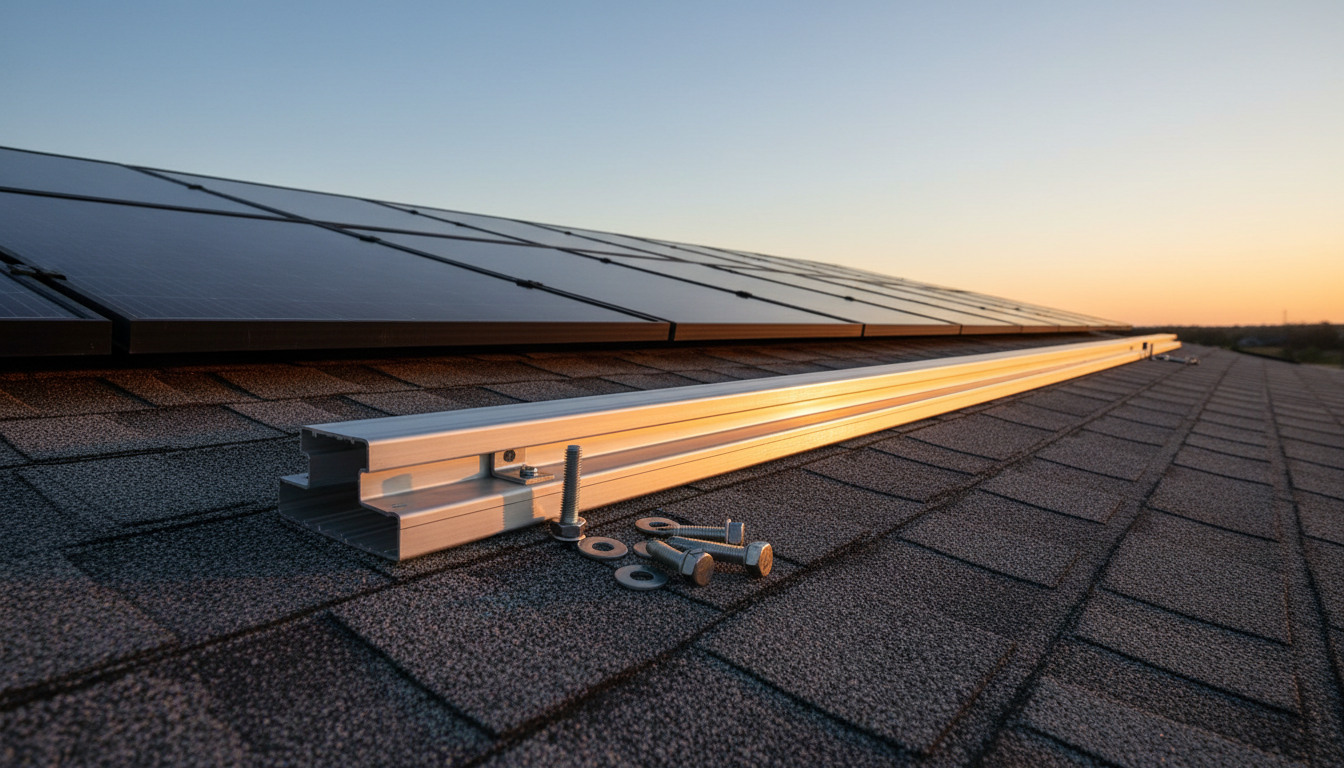
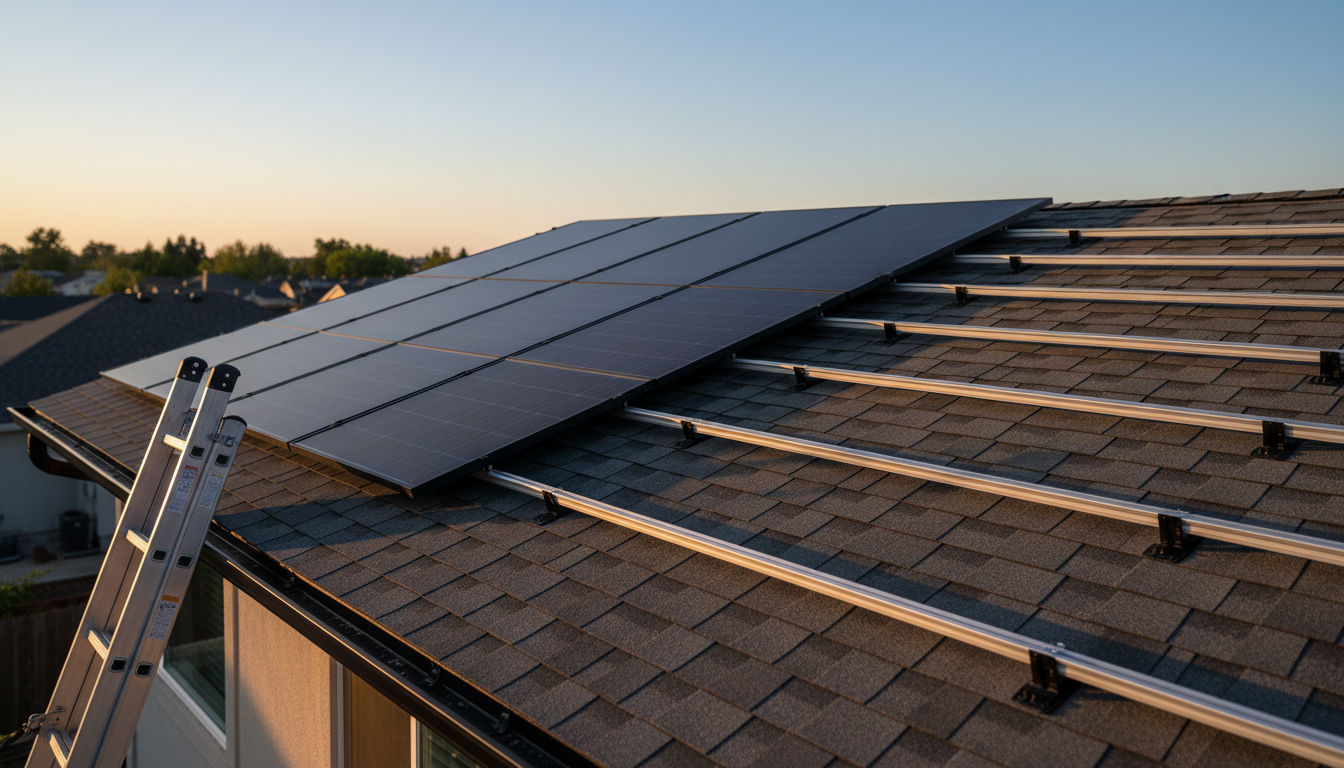
- Installation. The crew mounts the racking, the panels and the inverter equipment, and wires the system. The CPUC's sequence has the installer install "only after receiving city/county permit."
- Inspection. A city or county inspector checks the work against the permit and the building, electrical and fire codes. The utility may inspect too.
- Interconnection and PTO. The installer (sometimes the building department) sends the passed inspection and the final interconnection request to the utility. The utility reviews it and issues permission to operate. NREL defines PTO as "the final interconnection (IX) approval granted by the utility."
How long does it take to install solar panels?
NREL's numbers come from a project-level data set of about 131,000 residential systems installed between 2017 and 2021, roughly 7% of US home installs over those years. Here are its medians for 2021, the latest year in the study, all in business days:
| Step (NREL's phase name) | Median business days, 2021 | Roughly (our arithmetic) |
|---|---|---|
| Design: contract signed to applications submitted | 12 | 2½ weeks |
| Review: applications submitted to approved | 9 | 2 weeks |
| of which: local permit review | 6 | 1 week |
| Install: approval to installed | 9 | 2 weeks |
| Inspection: installed to inspections passed | 10 | 2 weeks |
| Post-inspection: passed to final utility request | 3 | under 1 week |
| Final interconnection: request to PTO | 7 | 1½ weeks |
| Total: contract signed to PTO | 68 | about 14 weeks |
Source: NREL Table 3. The step medians don't add up to the total median, because each one is the middle value for that step on its own. The report also found averages ran "1–2 weeks (4–10 business days) longer than the medians," because a minority of projects take far longer.
Read them with a few caveats.
- The range is wide. In NREL's words, "most PV projects in the data took anywhere from 5 weeks to 9–10 months between contract signing and system operation." Even projects in the same jurisdiction varied a lot.
- The data is from 2017 to 2021. The pattern of steps hasn't changed, but the medians in your area today may differ. NREL's SolarTRACE tool shows median cycle times "for over 1,500 jurisdictions with at least 10 installs in the data set."
- Permit review is usually short, sometimes not. NREL's SolarAPP+ review of 2023 data found a median permit review of 7 business days for traditional permits in the jurisdictions it studied, but "around 13% of traditional permits took more than 30 business days." Jurisdictions that use SolarAPP+, NREL's automated permitting tool, can issue code-compliant permits instantly.
- Failed inspections add time. In the same 2023 review, 29% of traditionally permitted PV projects in 11 jurisdictions "failed an inspection at least once."
- California's own estimate. The CPUC's 2022 guide says it "typically takes 1 to 3 months after you sign a contract for the solar system to be installed," and then "2 to 3 weeks to receive approval from your electricity provider to turn your system on. It could take longer."
None of these figures tells you how fast a particular installer works. The CPUC suggests asking each installer, before you sign, "When do you propose to start and finish installing solar on my roof?" and how long the utility's written approval will take after installation. An answer in writing is easier to come back to than one given at the kitchen table.
Why the system stays off until PTO
Once the panels are up, it's tempting to flip the switch. The CPUC's process overview says plainly: "turn on system only after receiving written approval from electricity provider." NREL notes that utilities that skip a pre-install review instead "review interconnection applications as part of the final approval process prior to system operation." The utility's sign-off is the step that lets a grid-connected system run.
Your utility's interconnection agreement and tariff set the rules where you live. If an installer tells you it's fine to turn the system on before the PTO letter arrives, ask the utility directly.
Who does the installation: licensing and certification
A rooftop system is a building and electrical job. The FTC suggests asking whether the company has "the licenses, certificates, or bonding required by your state, county, and city," and notes that "your state may require an installer to have an electrical contractor's license." Requirements vary by state. In California, the CPUC's 2025 guide says the contractor's license must be active and should carry the C-46 (Solar), C-10 (Electrical) and/or B (General Building) classification.
The Department of Energy's homeowner's guide to going solar adds that "the industry-standard certification is awarded through the North American Board of Certified Energy Practitioners (NABCEP)," and that a qualified installer will install panels "to meet local building, fire, and electrical codes." Your state's contractor licensing board can confirm a license number.
The same DOE guide says to "consider the age of your roof and how long until it will need replacement." Taking an array off and putting it back later is a separate job, so the site visit is the time to settle the roof question. Our guide on solar roof replacement covers the timing.
What paperwork the installer should hand over
By the end of a solar panel installation you should have a file you can find years later. The CPUC's checklist says "Save copies of all the documents you receive," because "the information will be useful if you sell your home, need to replace your roof, or have any repair or maintenance issues." Ask for:
- The signed contract and any financing agreement, plus any change orders.
- The issued building permit and the passed final inspection from the city or county.
- The utility's interconnection approval and the PTO letter or email, with the date.
- Warranties: the manufacturer warranties on panels and inverter and the installer's workmanship warranty, with how long each lasts. The FTC suggests comparing "the warranties and repairs included, and how long they last."
- The final system details: panel and inverter models, system size and the monitoring login.
- In California: the Solar Energy System Disclosure Document, which "by law, a solar provider must provide," per the CPUC.
A quote that doesn't name the equipment, the size and the warranty terms is hard to hold anyone to later. Our checklist of what a solar quote must show covers it.
Before the installation starts: price and the federal credit
Installation timing no longer changes the federal math. The IRS says the residential clean energy credit (section 25D) "is not available for any property placed in service after December 31, 2025," per its credit page. A 2026 project gets nothing from it, so any proposal that still subtracts it is out of date. Our guide on what happened to the federal residential credit explains the change, and what it costs to install solar panels covers price per watt.
Bottom line
A home solar panel installation goes from contract to site visit, design, permit, installation, inspection and then the utility's permission to operate. In NREL's 2017–2021 data that took 70 to 100 business days for a typical project, with a long tail of slower ones, and the time was split roughly evenly between installer, permitting office and utility. The roof work itself is one step among several. The system stays off until the utility's written approval arrives, and every document from the job is worth keeping. Before signing, it pays to check both the numbers and the installer.
Common questions
How long does solar panel installation take from signing to switch-on?
In NREL's study of about 131,000 home systems installed from 2017 to 2021, a typical project took 70 to 100 business days (about 14 to 20 weeks) from contract signing to permission to operate. Most projects fell somewhere between 5 weeks and 9 to 10 months.
Can I turn on my solar panels before permission to operate?
Not without the utility's go-ahead. California's utility regulator tells homeowners to turn the system on only after receiving written approval from the electricity provider, and utilities review the interconnection before the system is allowed to operate. Your utility's interconnection terms set the rule where you live.
What is permission to operate (PTO)?
NREL defines PTO as the final interconnection approval granted by the utility. It comes after the system is installed and has passed the required inspections.
Do solar panels need a building permit?
Usually. NREL notes that most local permitting authorities require an approved permit before a home solar system is installed, and the installer normally applies for it. Ask to see the issued permit before work starts.
What paperwork should the installer hand over at the end?
Ask for the signed contract, the issued permit and the passed final inspection, the utility's interconnection approval or PTO letter, and the equipment and workmanship warranties. California's regulator advises saving copies of every document for repairs, a roof replacement or a sale.
Sources
- NREL: Residential Solar Adoption Timelines and Impacts from the COVID-19 Pandemic (2022)
- NREL: SolarAPP+ Performance Review (2023 Data)
- NREL: Solar permitting, inspection and interconnection timelines
- California Public Utilities Commission: California Solar Consumer Protection Guide (March 2022 edition)
- California Public Utilities Commission: California Solar Consumer Protection Guide (published October 2025)
- U.S. Department of Energy: Homeowner's guide to going solar
- Federal Trade Commission: Solar power for your home
- Federal Trade Commission: Buyer's remorse, the FTC's Cooling-Off Rule
- IRS: Residential Clean Energy Credit
By SolarRealCost Editorial Team. First published November 7, 2026. Advertiser disclosure
Keep reading