Guide
Solar panel scams: the pitches to spot and what to do
Solar panel scams follow a few patterns: panels offered at no charge, fake officials, rushed tablet signatures. How to spot them, and what to do if you signed.
Updated October 26, 20265 min readReviewed by SolarRealCost Editorial Team, editorial review: primary sources checked and independently fact-checked
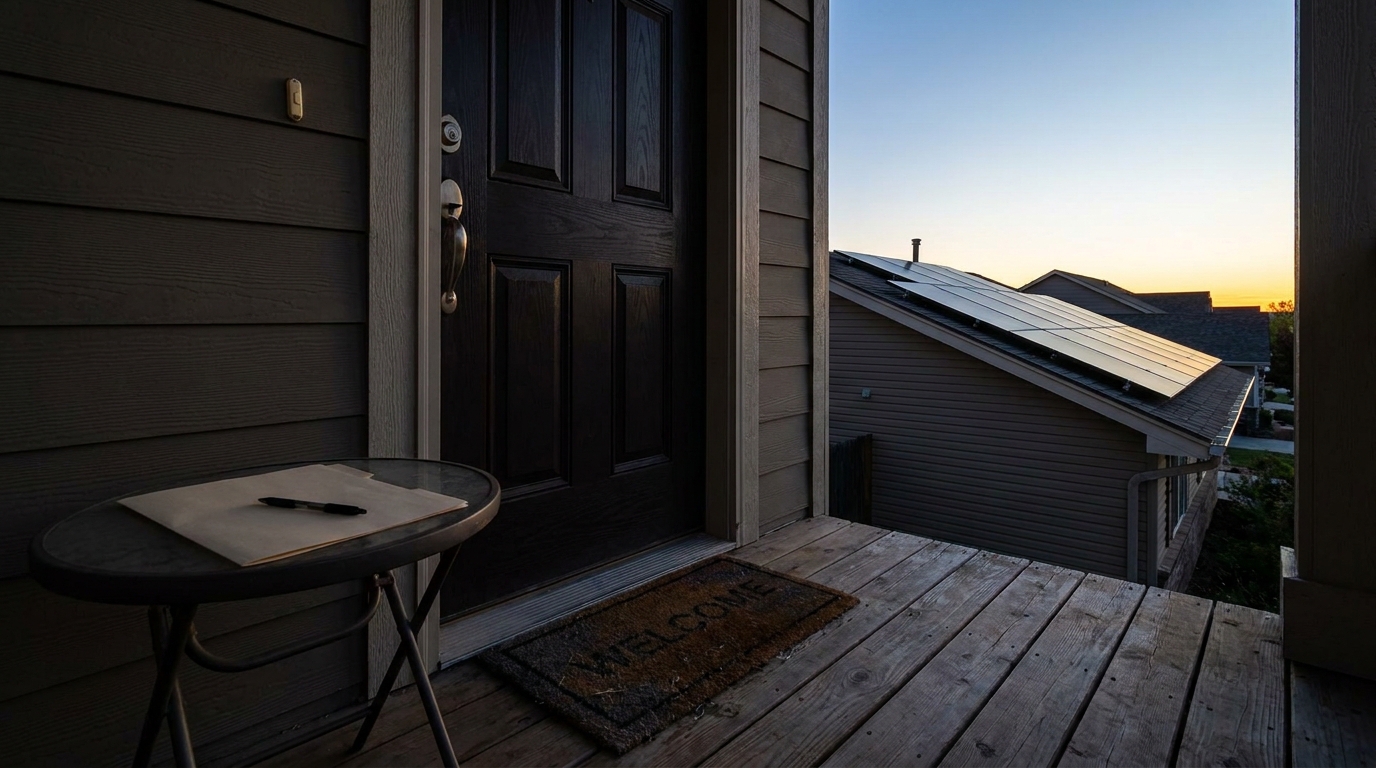
Solar panel scams mostly follow a handful of scripts: panels offered at no charge, a caller who claims to be from your utility or the government, a deal that has to be signed on a tablet right now. The Federal Trade Commission's advice is blunt. Offers of panels at no charge are scams, and anyone who pressures you into a contract or demands immediate payment is a scammer. If you've already signed, you may still be able to cancel.
The solar panel scams the FTC warns about
The FTC has published two consumer alerts on solar, in August 2024 and September 2024. Both describe the same moves.
The first is panels at no charge. A salesperson knocks and says the panels cost you nothing, or that grants and rebates cover the whole bill. The FTC says an offer like that is likely a scam, and is plain about it: "The federal government does not install solar systems in homes for free."
Then there are fake officials. The scam starts with "an unexpected phone call, message on social, or even an in-person visit." The caller may say they're from your utility or the government. Some go further and say your utility already signed you up, "so now you need to pay."
Speed and money up front come next. Scammers promise big savings if you act fast, and they ask for large upfront payments or deposits. The FTC says anyone who "pressures you into a contract or demands up-front or immediate payment is a scammer." It also warns about anyone who insists you sign on an electronic tablet without showing you the full agreement.
Some pitches are really after your personal details. Online offers that ask for your information are, at best, "someone generating leads to sell, not actual solar businesses," the FTC says, and at worst "scammers trying to steal your identity."
Pitches that aren't fraud but still cost you
Some of the worst deals come from real companies with real panels. The Consumer Financial Protection Bureau's 2024 report on solar financing found several patterns worth knowing, including these:
- Fees hidden in the loan. Some lenders add markups and fees that "can increase the loan principal by 30 percent or more above the cash price," often called "dealer fees," without saying they're a markup.
- Savings that were never certain. Consumers reported being told the panels would cover the loan and remove their future energy bills, when the actual benefits "are uncertain and can vary significantly by geographic location and season."
- A "net cost" built on the federal credit. Sales materials subtracted the expected federal credit from the loan amount to show a lower "net cost." Many loans also raise the monthly payment unless the borrower pays down a large share, typically 30%, the size of that credit.
That last pattern is worse now than when the report came out. The IRS says the Residential Clean Energy Credit (section 25D) "is not available for any property placed in service after December 31, 2025," and that it's claimed for the year the property is installed, not merely purchased. Any 2026 proposal that still subtracts 30% is out of date, whether the seller means harm or not. Our page on what happened to the federal solar credit has the details.
How to check a solar seller before you sign
The FTC's own advice is short: get quotes from reputable providers with a valid license, then compare them. Honest businesses will tell you exactly how much it'll cost to get and install the panels. The FTC also says to take the time to read and understand the agreement before you sign.
In practice that means:
- Check the license with your state's contractor licensing board before anyone climbs on your roof.
- Get at least two written quotes and compare them line by line. Our checklist of what a solar quote must show lists the lines that should be there.
- Read the whole agreement before signing. The FTC says to look at warranties, cancellation policies and payment schedules, and to watch for hidden fees.
- Know which deal it is. A lease or power purchase agreement is not a purchase. See cash, loan, lease or PPA for how they differ.
- Run your own numbers at your real electricity price, with the federal credit at zero, and compare them with what solar costs to install.
If you already signed
The FTC's Cooling-Off Rule gives you three days to cancel certain sales made at your home, workplace or dormitory. "Your right to cancel for a full refund lasts until midnight of the third business day after the sale." The seller has to tell you about that right at the time of the sale and give you cancellation forms. To cancel, sign and date one copy of the form and get it postmarked before that deadline. If you never got the forms, write a cancellation letter, and send it by certified mail.
Your state may give solar contracts a longer window. Check yours with the tool below, and see our full guide to cancelling a solar contract.
Bottom line on solar panel scams
Solar panel scams usually offer something for nothing, borrow an official's name, or set a deadline. Slow down, check the license, get competing written quotes and run the numbers with the federal credit at zero. If you signed at home in the last few days, you may still be able to cancel. Act in writing, today.
Common questions
Does the government install solar panels for free?
No. The Federal Trade Commission says the federal government does not install solar systems in homes for free, and that offers of panels at no charge are scams.
Can I still get the federal credit for solar in 2026?
No. The IRS says the Residential Clean Energy Credit is not available for any property placed in service after December 31, 2025. A 2026 quote that subtracts it is wrong.
What should I do if I signed a solar contract at my door?
The FTC's Cooling-Off Rule gives you until midnight of the third business day after the sale to cancel many sales made at your home, and your state may give longer. Act quickly, in writing, and keep a copy.
Where do I report a solar scam?
The FTC asks people to report scams at ReportFraud.ftc.gov. You can also contact your state's consumer protection office, which USA.gov lists by state.
Sources
- Federal Trade Commission: How to avoid getting burned by solar or clean energy scams
- Federal Trade Commission: Solar energy is rising in popularity. So are scams.
- Federal Trade Commission: Buyer's remorse: the FTC's Cooling-Off Rule may help
- Consumer Financial Protection Bureau: Solar Financing Market, Issue Spotlight (August 2024)
- USA.gov: State consumer protection offices
- IRS: Residential Clean Energy Credit
By SolarRealCost Editorial Team. First published October 26, 2026. Advertiser disclosure
Keep reading