Guide
Solar incentives by state: what's left in 2026 and how to find yours
Solar incentives by state after section 25D ended: the five kinds of state and utility programs left, how to look yours up in DSIRE, and how each changes payback.
Updated November 7, 20268 min readReviewed by SolarRealCost Editorial Team, editorial review: primary sources checked and independently fact-checked
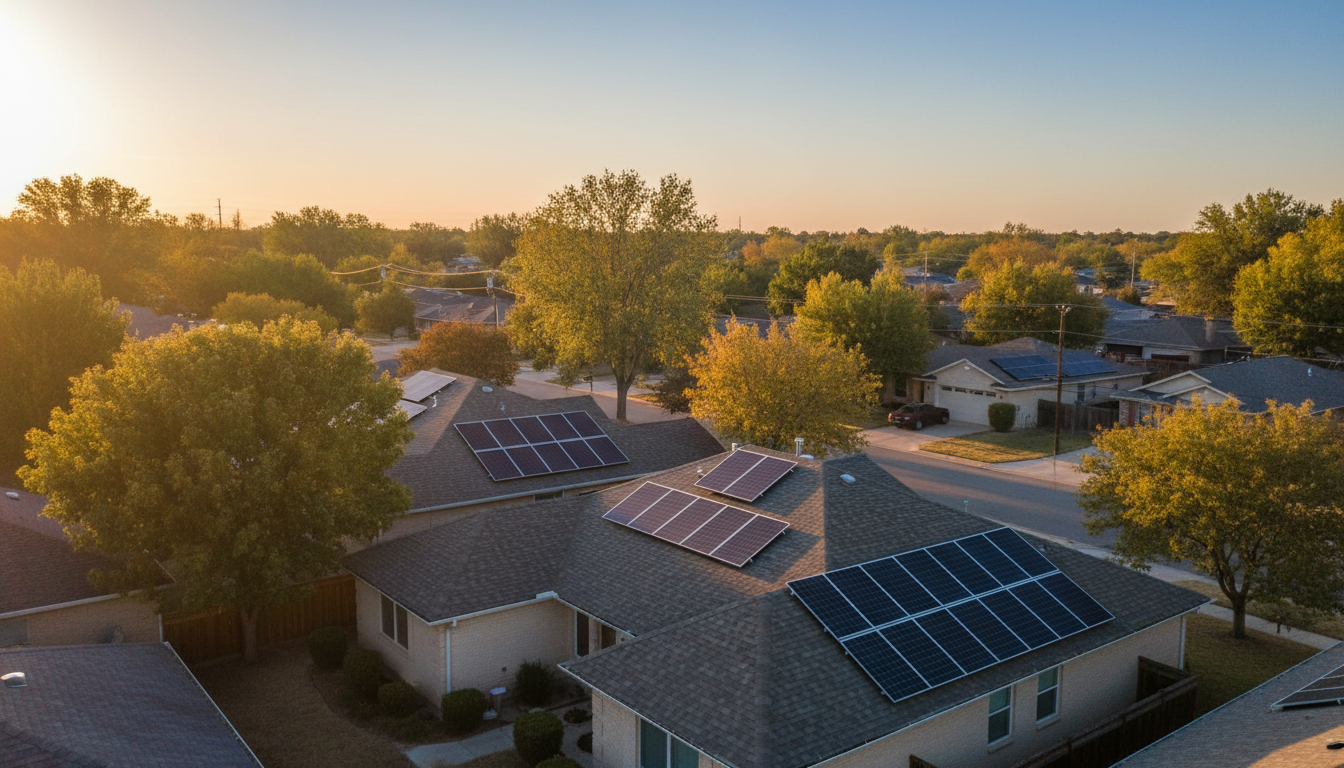
Solar incentives by state are now most of what's left. The IRS says the federal residential credit (section 25D) "is not available for any property placed in service after December 31, 2025," so a home system switched on in 2026 gets nothing from it. State, local and utility programs are set separately, and many are still running. They come in five kinds: rebates, property-tax exemptions, sales-tax exemptions, payments for the power a system produces, and credit for the power it exports. Which ones apply to you depends on your state and your utility. You can look them up in DSIRE, and the agency that runs each program confirms the details.
What solar incentives are left in 2026?
Once the federal residential credit is gone, what's left comes from states, cities and utilities. DSIRE's glossary sorts programs into types, and these five matter most to a homeowner buying a system.
| Kind of incentive | What it does | How it changes payback |
|---|---|---|
| State or utility rebate | Cash toward the installed cost, sometimes paid to the contractor | Lowers the net price, once |
| Property-tax exemption | Keeps the value solar adds out of your home's assessment | Avoids a yearly cost that would otherwise go up |
| Sales-tax exemption | Removes state (and sometimes local) sales tax on the equipment | Lowers the net price, once |
| Performance payment (PBI, SREC) | Pays per unit of power the system produces, for a set term | Adds yearly income |
| Export credit (net metering, net billing) | Credits the power you send to the grid | Sets how much your exports earn each year |
Some states also offer a credit or deduction against state income tax, which DSIRE files as a "personal tax incentive." Check that with a tax preparer before you count on it. Some places offer low-interest loans or PACE financing too. Those change how you pay, not what the system costs.
State rebates
DSIRE describes rebates as cash incentives that "states, utilities and a few local governments" offer for installations that meet the program's specifications. They're simple to count and easy to miss, because the money is limited.
Here's an example, as of 2026-11. The Oregon Solar + Storage Rebate Program pays rebates "to approved contractors, who pass the savings on to their customers." After it reopened on June 15, 2026, the Oregon Department of Energy received enough applications to fully reserve the $1.1 million available, and it "is not currently accepting rebate reservation applications." It also requires a reservation "before starting construction or installation." A rebate that's closed or reserved after your installer started is worth nothing to you.
Property-tax exemptions
DSIRE says most property-tax incentives exclude "the added value of a renewable energy system" from the assessment. Property taxes are local, so some states leave the decision to cities and counties.
- Texas, as of 2026-11: Tax Code Section 11.27 exempts the appraised value tied to a solar device that's mainly for energy used on site. The Comptroller's guidelines say "these exemptions are not automatic," and owners have to apply. The Comptroller's exemptions page names the form, Form 50-123.
- California, as of 2026-11: solar has long been left out of "newly constructed" property for tax purposes. The Board of Equalization's Letter to Assessors No. 2026/034, dated September 1, 2026, says this exclusion "will become inoperative, rather than repealed, on January 1, 2027." Systems excluded before then "will remain excluded from property tax until the property changes ownership." Whether a particular installation qualifies in time is a question for your county assessor.
Sales-tax exemptions
DSIRE describes these as an exemption from, or a refund of, state sales tax on the system. New York is an example of how the layers work. Under the state tax department's Publication 718-S (March 2022 edition), residential solar equipment and its installation are exempt from the 4% state rate. Local sales tax is exempt "only if the jurisdiction specifically enacts the exemption," and the publication lists the counties and cities that haven't. At 4%, the state part comes to $400 for every $10,000 of taxable price (our arithmetic). The local part depends on where you live.
Performance payments and SRECs
A performance-based incentive pays "based on the number of kilowatt-hours" a system generates. Some states whose renewable rules carve out a share for solar use solar renewable energy credits (SRECs) instead, one per megawatt-hour produced, which DSIRE says "can be bought and sold as commodities in the market."
New Jersey is a live example, as of 2026-11. Its ADI Program shows registrations as open, and it pays net-metered home systems in SREC-IIs. A May 21, 2026 Board order cut the residential value from $85 to $77 per MWh for registrations received on or after July 27, 2026. Board staff sized the incentive assuming a term of 15 years. $77 per MWh works out to 7.7 cents for every kilowatt-hour the system produces (our arithmetic), paid on top of whatever the power saves on your bill. New Jersey's rules also bar starting construction before the program issues its notice of conditional registration. A temporary waiver covered only packages submitted between July 4 and December 31, 2025.
Export credit: net metering and net billing
Unlike a rebate, export credit shows up on every bill, so its rate matters for years. DSIRE describes net metering as letting exports offset power you'd otherwise buy "at the utility's full retail rate," and it notes that state policies "vary widely." For example, in the territory of California's three large utilities, customers applying since April 15, 2023 take service on a net billing tariff. Under it, exports are credited "at a rate reflecting the value of this generation to the grid" instead of at the retail rate. Our guide to what your utility pays for exported solar covers how to get your own utility's answer in writing.
How to look up solar rebates by state
Nobody keeps a 50-state table current for long. Programs open, run out of money and get cut by board order, as the Oregon and New Jersey examples show. Here's how to find the current answer for your own address:
- Search DSIRE. On DSIRE you can search by ZIP code or by state, including federal programs, D.C. and the territories. Filter for the types above. The site is run by the N.C. Clean Energy Technology Center at N.C. State University and says it "receives support from EnergySage." The pages also carry an EnergySage quote offer, which is separate from the program listings.
- Go to the agency that runs each program. DSIRE is an index. The program itself lives with your state energy office, the state tax or revenue department, the utility commission or your utility. The U.S. Department of Energy's State Energy Program gives formula grants to all 50 states, five territories and D.C., so searching your state's name with "state energy office" usually finds the right agency.
- Ask your county assessor or appraisal district about the property-tax treatment and any form you have to file.
- Ask your utility, in writing, which export tariff a new solar customer goes on today.
For each program, get answers to these questions:
- Is it open, and is money still available today?
- Do you have to apply or reserve before the contract is signed or before installation starts?
- Who applies and who gets paid: you, the installer or the system's owner?
- Is it a one-time amount or a payment over time? If over time, for how many years, and at what rate?
- Does it end if you sell the home?
If you're looking at a lease or power purchase agreement (PPA), ask which of these incentives the leasing company keeps because it owns the system. Our guide to cash, loan, lease or PPA explains the four structures.
How solar incentives change payback
Simple payback is the net price divided by what the system saves or earns each year. Upfront incentives (a rebate, a sales-tax exemption) shrink the first number. Ongoing ones (a performance payment, export credit) grow the second. A property-tax exemption keeps a new yearly cost from appearing at all. That's why the same panels can pay off in very different times in neighboring states. Our pillar guide on what solar costs to install covers the price side, and are solar panels worth it now walks through the whole decision.
Once you have quotes, put them side by side on the same lines, with each incentive listed as its own item. That way you can see which numbers depend on a program you haven't confirmed yet.
Bottom line
Solar incentives by state are real. They're also local and they change often, and as of 2026-11 there's no federal line under them. Look your address up in DSIRE, confirm each program with the agency that runs it, find out whether you have to apply before work starts, and work out the payback with and without each one. If the numbers only hold up with an incentive you can't confirm, they don't hold up. A licensed installer, your utility and your county assessor can confirm the details for your home.
Common questions
Are there still solar incentives in 2026 now that the federal residential credit is gone?
There are, but they come from states, cities and utilities, not from the federal government. The IRS says the section 25D credit is not available for property placed in service after December 31, 2025. What remains differs from state to state: rebates, property-tax and sales-tax exemptions, payments for each unit of power the system produces, and credit for the power you export.
How do I find the solar rebates in my state?
Search your ZIP code or state in DSIRE, the incentive database run by the N.C. Clean Energy Technology Center at N.C. State University. Then confirm each program on the page of the agency that runs it, such as the state energy office, the state tax department or your utility. Check that it is open and funded, and find out whether you have to apply before installation starts.
Is a solar property-tax exemption automatic?
Not always. Texas exempts the appraised value a solar device adds to a home, but the Comptroller's guidelines say the exemption is not automatic, and owners have to file Form 50-123 with the appraisal district. Ask your county assessor or appraisal district how it works where you live.
How do state incentives change solar payback?
Upfront incentives such as a rebate or a sales-tax exemption cut the net price. Ongoing ones, such as a performance payment or export credit, add to what the system earns each year. Run the payback both with and without each incentive, and leave out any program you can't confirm in writing.
Does California still exclude solar from property tax?
Only for a while longer. The California Board of Equalization says the exclusion becomes inoperative on January 1, 2027. Systems that qualify before that date stay excluded until the property changes ownership. Your county assessor can tell you whether a particular installation will qualify in time.
Sources
- IRS: Residential Clean Energy Credit (not available for property placed in service after December 31, 2025)
- DSIRE: Database of State Incentives for Renewables & Efficiency
- DSIRE: Glossary of policy and incentive types
- U.S. Department of Energy: State Energy Program
- Oregon Department of Energy: Oregon Solar + Storage Rebate Program
- Texas Comptroller: Property tax exemptions (solar and wind-powered energy device)
- Texas Comptroller: Solar and Wind-Powered Energy Device Exemption Guidelines (May 2022)
- California State Board of Equalization: Letter to Assessors No. 2026/034 (September 1, 2026)
- New York State Department of Taxation and Finance: Publication 718-S, local rates on residential solar equipment (March 2022)
- New Jersey Clean Energy Program: Administratively Determined Incentive (ADI) Program
- New Jersey Board of Public Utilities: Order on the three-year review of the ADI Program (May 21, 2026)
- California Public Utilities Commission: Net energy metering and net billing
By SolarRealCost Editorial Team. First published November 7, 2026. Advertiser disclosure
Keep reading