Guide
Does solar increase home value? What the studies found
Does solar increase home value? Berkeley Lab found buyers paid more for homes with owned solar, about $4 per watt, but not for leased systems. The limits.
Updated October 26, 20265 min readReviewed by SolarRealCost Editorial Team, editorial review: primary sources checked and independently fact-checked
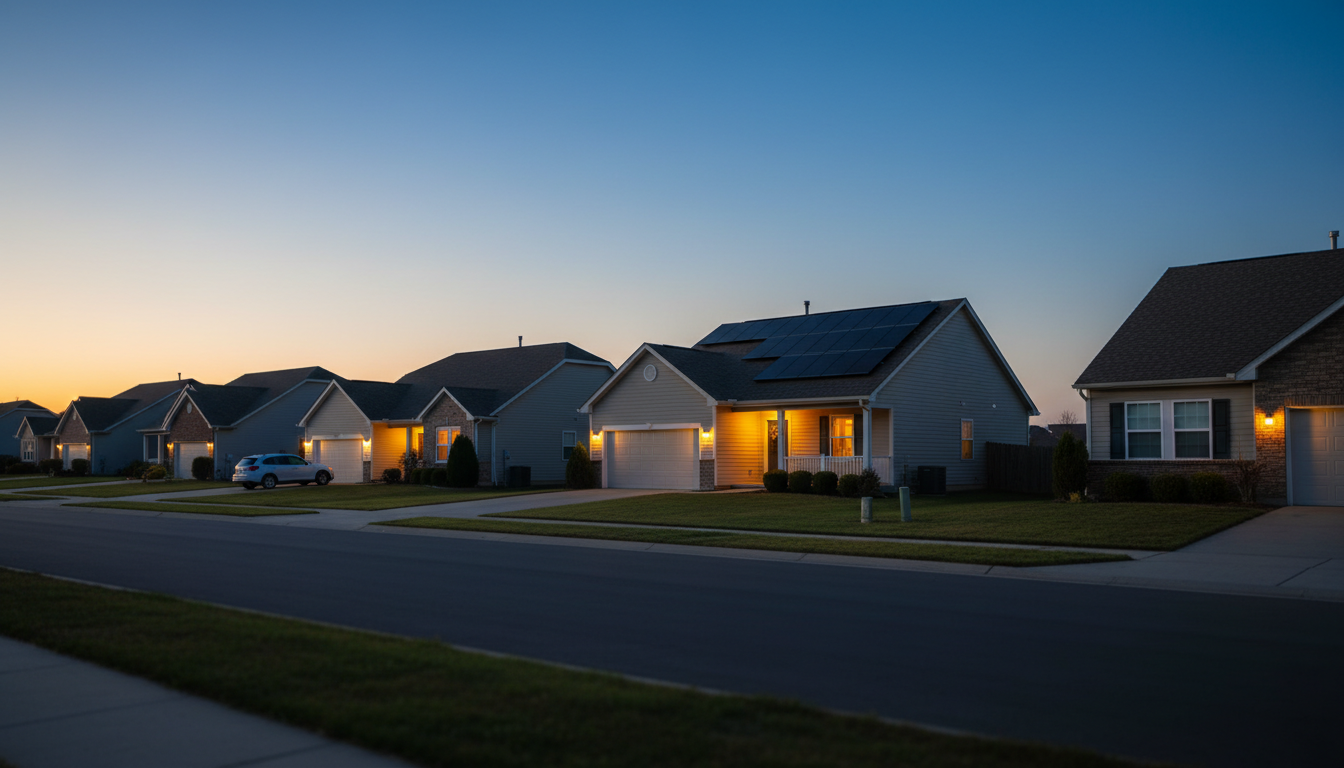
Does solar increase home value? For panels the homeowner owns outright, Berkeley Lab's research says yes: Lawrence Berkeley National Laboratory found buyers paid about $4 per watt more, or roughly $15,000 for an average 3.6 kW system. For leased systems, the same lab found no measurable premium. Both studies use sales that are now more than ten years old, so treat the numbers as a sign of direction, not a price you can bank on.
Does solar increase home value? What Berkeley Lab measured
One of the largest public studies is Berkeley Lab's "Selling Into the Sun," published in 2015, which more than doubled the number of solar home sales analyzed in earlier research. It compared 22,822 home sales, 3,951 of them with solar, across eight states from 2002 to 2013. The lab compared homes with solar to homes without it in the same neighborhoods (census block groups), controlling for size, age and lot.
Its headline finding: "home buyers are consistently willing to pay PV home premiums across various states, housing and PV markets, and home types." Averaged across the sample, that premium came to "approximately $4/W or $15,000 for an average-sized 3.6-kW PV system."
The study covered only systems the homeowner owned ("host-owned"), and its addresses came from state and utility incentive programs in California, Connecticut, Florida, Massachusetts, Maryland, North Carolina, New York and Pennsylvania.
Why the number is less certain than it looks
Before you lean on that figure, look at what's behind it.
California dominates the data. The report notes that California homes make up 97% of the full sample, which is why the California estimate ($4.21/W) is so close to the overall one. For homes outside California, the premium was $3.11/W and statistically significant, but with a 95% confidence interval of plus or minus $2.33/W. So a premium showed up, but the lab couldn't pin down its size.
The premium fades with age. The lab found the market "appears to depreciate the value of PV systems in their first 10 years at a rate exceeding the rate of PV efficiency losses" and faster than straight-line depreciation. A ten-year-old system is worth less to a buyer than a new one, and not just because it produces a bit less. Our guide on how long solar panels last covers the equipment side.
The data is old, and so is the price context. The study also found that net cost estimates, which account for government and utility incentives, "may be the best proxy for market premiums." The incentives have changed since then. The IRS says the federal Residential Clean Energy Credit "is not available for any property placed in service after December 31, 2025." No study we found measures home sale premiums under 2026 prices, so we won't guess at one.
Leased and PPA systems: no measurable premium
Ownership is the dividing line. Berkeley Lab's 2017 follow-up, "Leasing Into the Sun," looked at 20,106 California home sales from 2011 to 2013, including 113 with third-party-owned (TPO) systems such as leases and power purchase agreements. It "fails to uncover statistically significant premiums for TPO PV homes nor for those with pre-paid leases as compared to non-PV homes." A separate comparison of 18 matched pairs of homes in San Diego also found no evidence of an effect on value.
The same report notes that sales of homes with owned systems, "both here and previously," showed larger and statistically significant premiums. So if part of your reason for going solar is resale value, a lease or PPA doesn't deliver it on the evidence we have. See cash, loan, lease or PPA for how the payment choice changes the rest of the deal.
What a solar loan or lease means when you sell
Even an owned system can come with paperwork that follows the house. The CFPB's 2024 report on solar financing describes the usual paths for a homeowner who sells before the solar loan is paid off: the buyer assumes the loan, if the lender permits it, or the seller pays off the balance before the sale.
The CFPB also flags liens. "Lenders commonly file UCC liens on the solar panels themselves," it says, and quotes a report noting that such a lien is "technically not on the property, but it can muddy the title because some jurisdictions view the lien as applying to the whole property." If that happens, "the lien must either be released or made subordinate to the mortgage or refinance."
If you're financing, ask the lender before you sign whether it files a UCC lien, how a payoff at sale works, and whether a buyer can assume the loan.
Run the numbers on savings, not resale
A possible bump in sale price is a weak reason to buy solar on its own. It depends on owning the system, on its age when you sell, and on a market the main study can only describe up to 2013. The savings on your own electricity bill are something you can estimate today, at your own rate.
If the system pays for itself in savings while you live there, any premium at sale is a bonus. If the math only works with a resale premium baked in, treat that as a warning sign. Our page on whether solar panels are worth it walks through the savings side.
Bottom line
Does solar increase home value? In Berkeley Lab's research, owned systems have added value, about $4 per watt, while leased systems added none it could measure. That evidence is mostly from California sales before 2014, and the premium fades as the system ages. Decide on the savings you can calculate, check the financing terms that follow the house, and compare the whole price against what solar costs to install.
Common questions
Does solar increase home value?
For systems the homeowner owns, Berkeley Lab's multi-state study found buyers paid a premium of about $4 per watt, roughly $15,000 for an average 3.6 kW system. The sales it studied ran from 2002 to 2013 and were mostly in California.
Does a leased solar system add value to a house?
Berkeley Lab's study of California sales from 2011 to 2013 found no statistically significant premium for homes with third-party-owned systems, including prepaid leases, compared with homes without solar.
Do older solar systems add less value?
Yes. Berkeley Lab found the market appeared to depreciate the value of a system in its first 10 years faster than the rate of panel efficiency losses and faster than straight-line depreciation.
Can a solar loan cause problems when I sell?
It can. The CFPB says lenders commonly file UCC liens on the panels, which can muddy the title in some places until the lien is released or subordinated. The loan usually has to be paid off before the sale or assumed by the buyer if the lender allows it.
Sources
- Lawrence Berkeley National Laboratory: Selling Into the Sun, Price Premium Analysis of a Multi-State Dataset of Solar Homes (2015)
- Lawrence Berkeley National Laboratory: Leasing Into the Sun, Transactions of Homes with Third Party Owned Solar (2017)
- Consumer Financial Protection Bureau: Solar Financing Market, Issue Spotlight (August 2024)
- IRS: Residential Clean Energy Credit
By SolarRealCost Editorial Team. First published October 26, 2026. Advertiser disclosure
Keep reading